Isolation and self-imposed withdrawal
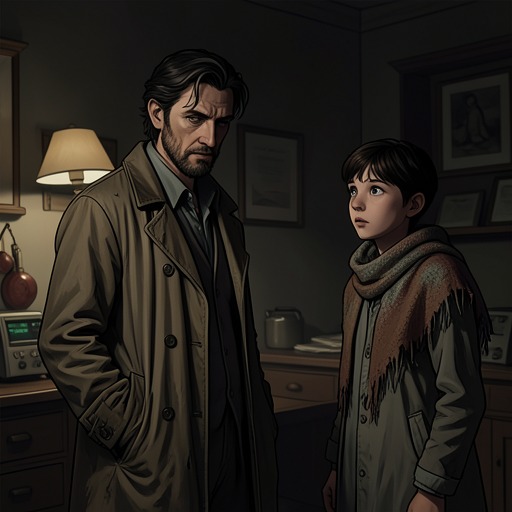
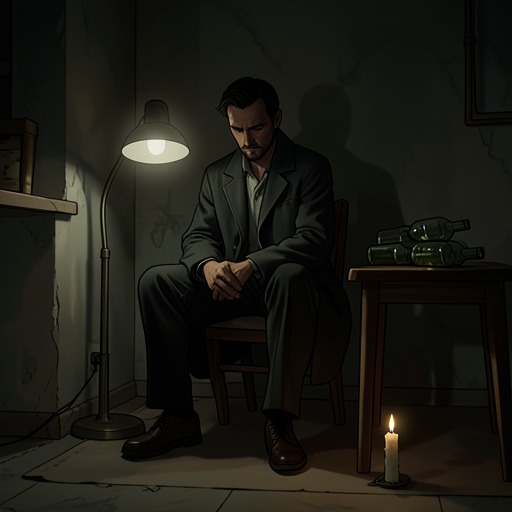
Crime and PunishmentIsolation and self-imposed withdrawal are defining conditions of Rodion Romanovitch Raskolnikov’s early life in the novel: poverty and distress narrow his world, while his deliberate avoidance of other people makes even ordinary contact feel burdensome. The pattern reaches from slipping past his landlady to living in a neglected room and cutting himself off from former university companions. Yet his uncertain impulse to seek out Razumihin shows that withdrawal has not erased the possibility of connection; it has made that possibility strange and difficult to act upon.
Condition and Daily Avoidance
Rodion Romanovitch Raskolnikov is deeply in debt to his landlady, and the prospect of meeting her on the stairs fills him with a sick, frightened feeling and shame. The narration distinguishes this response from simple cowardice or abjection: for some time he has been in an overstrained, irritable condition tending toward hypochondria. His avoidance is therefore presented as part of a wider inward crisis, not merely a practical tactic for evading a particular creditor.
The prospect he most dreads is not punishment itself. Nothing his landlady might do has any real terror for him; what he cannot bear is being stopped, made to listen to irrelevant gossip, pressed for payment, threatened or complained at, and forced to invent excuses or lie. Rather than face that exchange, he creeps down the stairs like a cat and slips out unseen. His poverty exposes him to demands from others, while retreat lets him escape the immediate humiliation of answering them.
This withdrawal has expanded beyond the landlady. He has become so absorbed in himself and isolated from his fellows that he dreads meeting anyone at all. Although poverty has crushed him, the practical anxieties of his position have lately ceased to weigh on him in their usual way: he has stopped attending to practical matters and lost the desire to do so. His isolation thus involves not only keeping others at a distance but also a weakening of his engagement with the ordinary tasks through which hardship might be addressed.
The Room as a Shelter of Neglect
The small room in which he lives gives physical form to this closed-off condition. It is about six paces long, with dusty yellow wallpaper peeling from the walls and a low ceiling that leaves a taller person feeling constantly at risk of striking his head. Three old, rickety chairs and a corner table holding manuscripts and books furnish the cramped space; thick dust on the books and papers marks how long they have gone untouched. A large, clumsy sofa takes up much of the room and serves as his bed.
His habits deepen the room’s disorder. He often sleeps on the sofa without undressing or using sheets, wrapped in his old student overcoat. He makes a bolster by gathering his linen, clean and dirty alike, beneath a small pillow. This is not presented as an environment he is actively trying to improve: in his present state of mind, its extreme disorder feels agreeable. He has withdrawn from everyone like a tortoise in its shell, and even the sight of a servant girl entering the room can make him writhe with nervous irritation.
The isolation also appears in the routine of care. For the last fortnight, his landlady has stopped sending meals, and he has not thought to protest, though he goes without dinner. Nastasya, the cook and only servant, has largely stopped cleaning his room; she comes in with a broom only about once a week. She wakes him late one morning and brings tea, remarking that he must be starving. The scene makes his withdrawal concrete: basic needs go unattended, not because the surrounding people are entirely absent, but because he does not initiate a demand for help or even object to being neglected.
Estrangement from Former Companions
His social distance predates this particular spell of deprivation. At university, he had hardly any friends, kept aloof, visited no one, and discouraged visitors. He took no part in student gatherings, amusements, or conversations. Though he worked with great intensity and earned respect for it, he was not liked. His poverty was accompanied by a haughty reserve that led some comrades to think he regarded them as children, inferior in development, knowledge, and convictions. The account connects isolation to visible conduct and to the impression he made on others, without reducing it to a single cause.
Razumihin is a notable exception, though even that friendship has been interrupted by Rodion Romanovitch Raskolnikov’s withdrawal. With Razumihin he had been more open and communicative. Razumihin is described as good-humoured, candid, and unusually resilient in the face of failure and hardship; he supports himself through whatever work he can find and hopes to save enough to return to university. His resourcefulness presents a sharp contrast with Rodion Romanovitch Raskolnikov’s retreat from practical concerns, but the contrast does not make their relationship uncomplicated.
Rodion Romanovitch Raskolnikov has not visited Razumihin for four months, and Razumihin does not even know his address. About two months earlier they met in the street; Rodion Romanovitch Raskolnikov turned away and crossed to the other side to avoid being noticed. Razumihin saw him but passed by rather than risk annoying him. Their estrangement is therefore maintained from both sides in different ways: one actively evades recognition, while the other refrains from imposing contact.
The Uneasy Possibility of Return
After reading a letter, Rodion Romanovitch Raskolnikov remembers that he had set out for Vassilyevsky Ostrov to see Razumihin. He recalls that he had considered asking him for work or for help finding lessons, but immediately questions the usefulness of doing so. Even if Razumihin found him work or shared his last money, Rodion Romanovitch Raskolnikov reasons, he would still need boots and presentable clothes to teach, and the small amount he might earn would not answer what he wants now. The remembered purpose of the visit therefore meets the same withdrawal that has kept him away: he can imagine practical assistance, then dismiss it as inadequate.
His response is more unsettled than a straightforward refusal. He wonders why he is going to Razumihin and searches for a sinister significance in what may be an ordinary action. The question agitates him more than he recognizes; he even wonders whether he expected Razumihin alone to set everything right. After pondering and rubbing his forehead, he has a fantastic thought that seems to arrive spontaneously and by chance. The evidence does not resolve that thought here, but it establishes the important change in his movement: an attempt to approach another person becomes entangled with suspicion and inward speculation before it can become ordinary companionship.
Across these scenes, isolation is both social behavior and a condition that distorts practical life. Rodion Romanovitch Raskolnikov avoids conversation, refuses or neglects ordinary care, and breaks contact even with the university companion with whom he once spoke more freely. Yet the remembered journey toward Razumihin keeps a fragile opening in view. The possibility of connection remains, but it reaches him as an uneasy question rather than a settled return.